
What we advise on
Rope access is not always the answer. A swing stage, a lift or scaffold sometimes is, and we will say so.
-
Access review
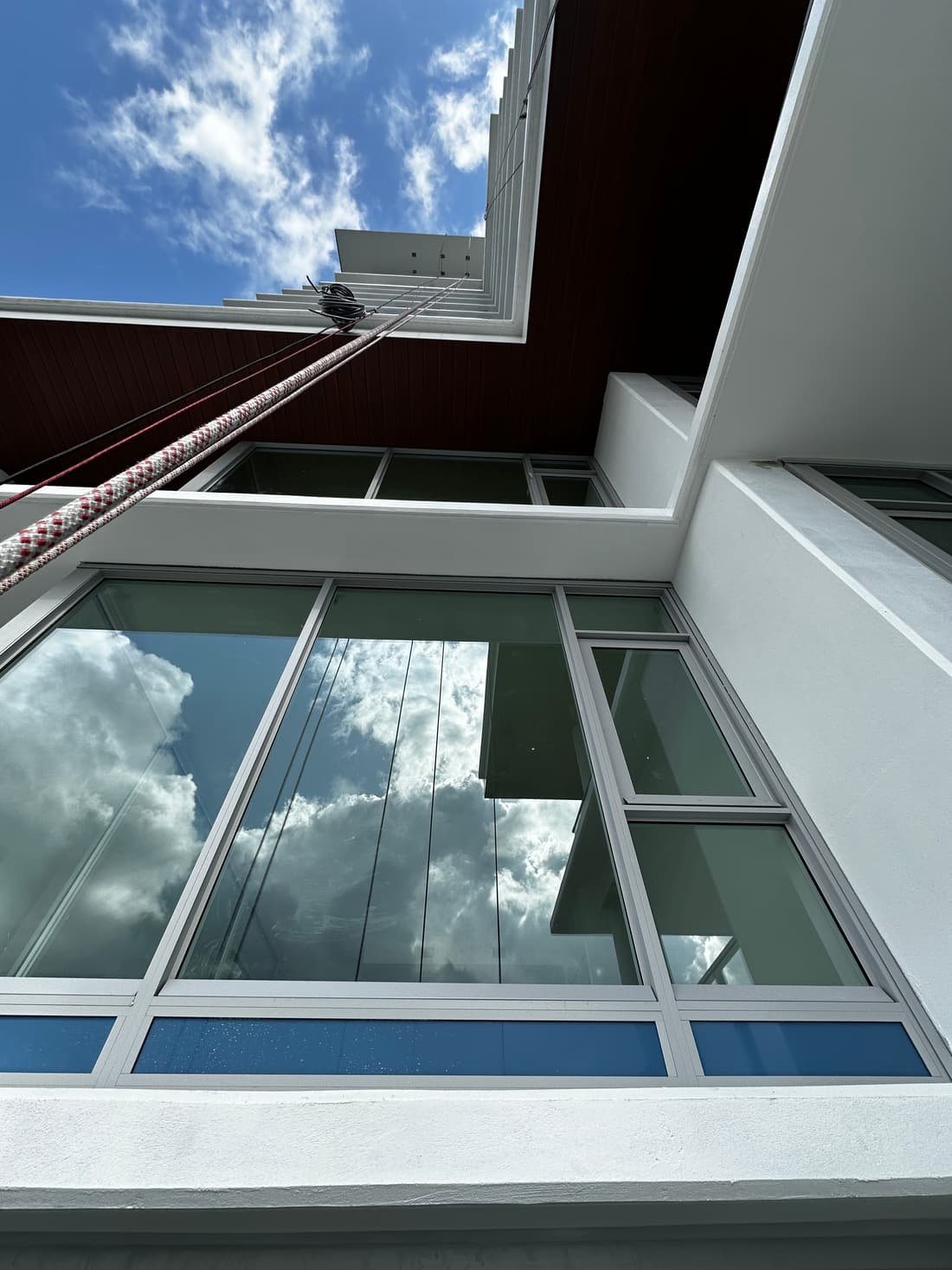
Ropes, swing stage, lift or scaffold compared for each elevation.
-
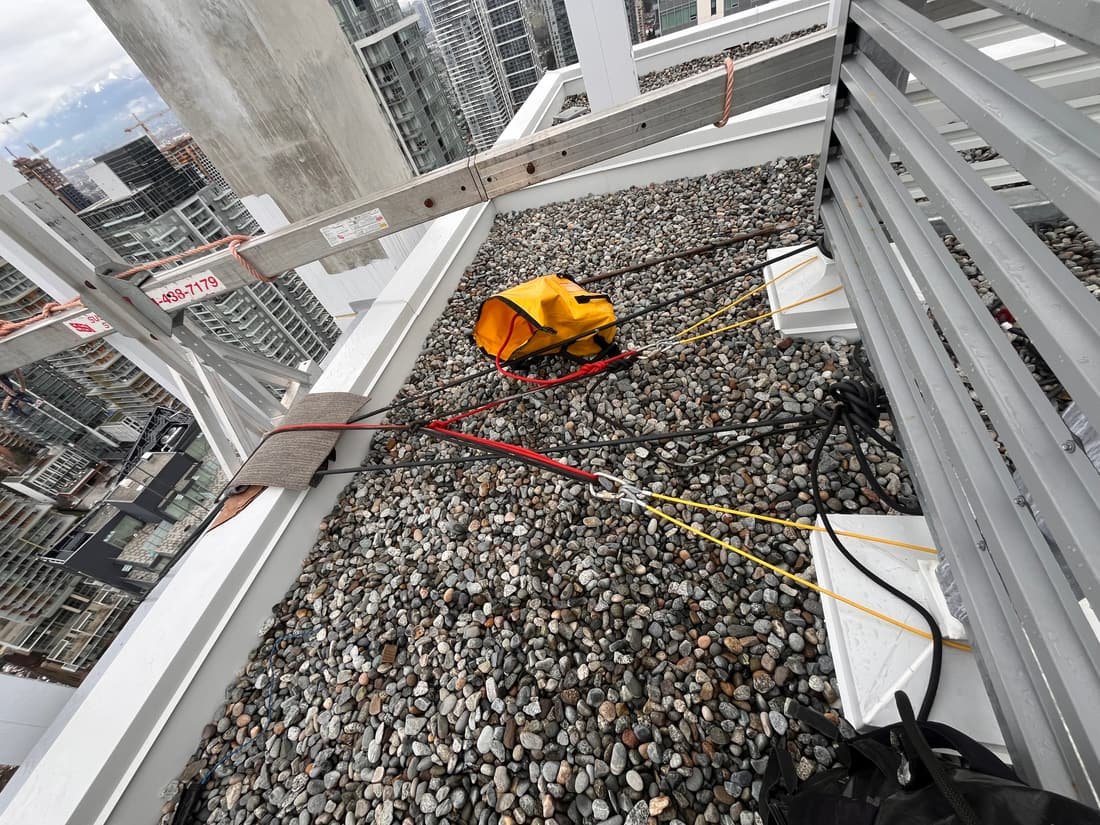
Anchor check
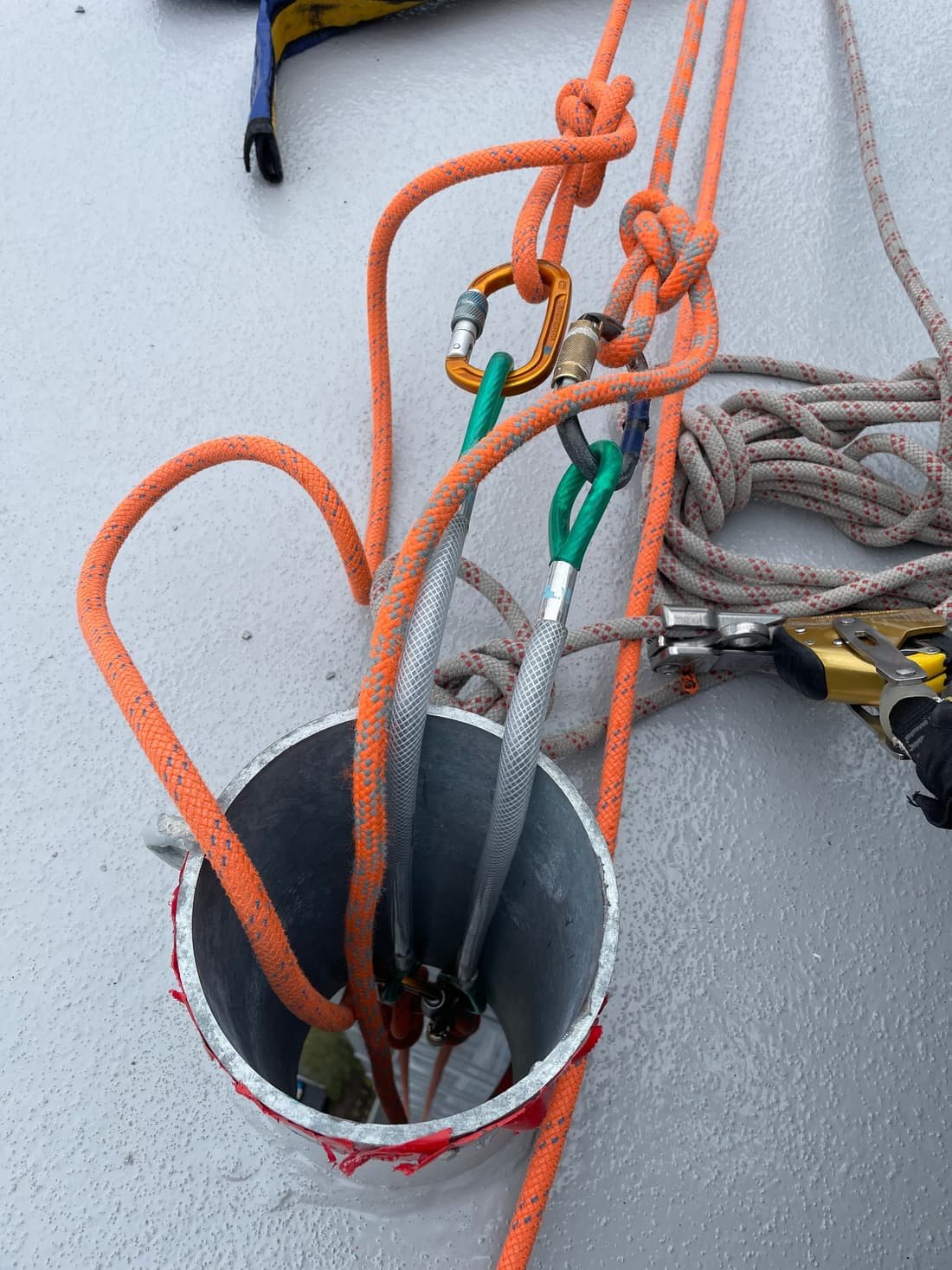
What the roof offers today and what an engineer would need to add.
-
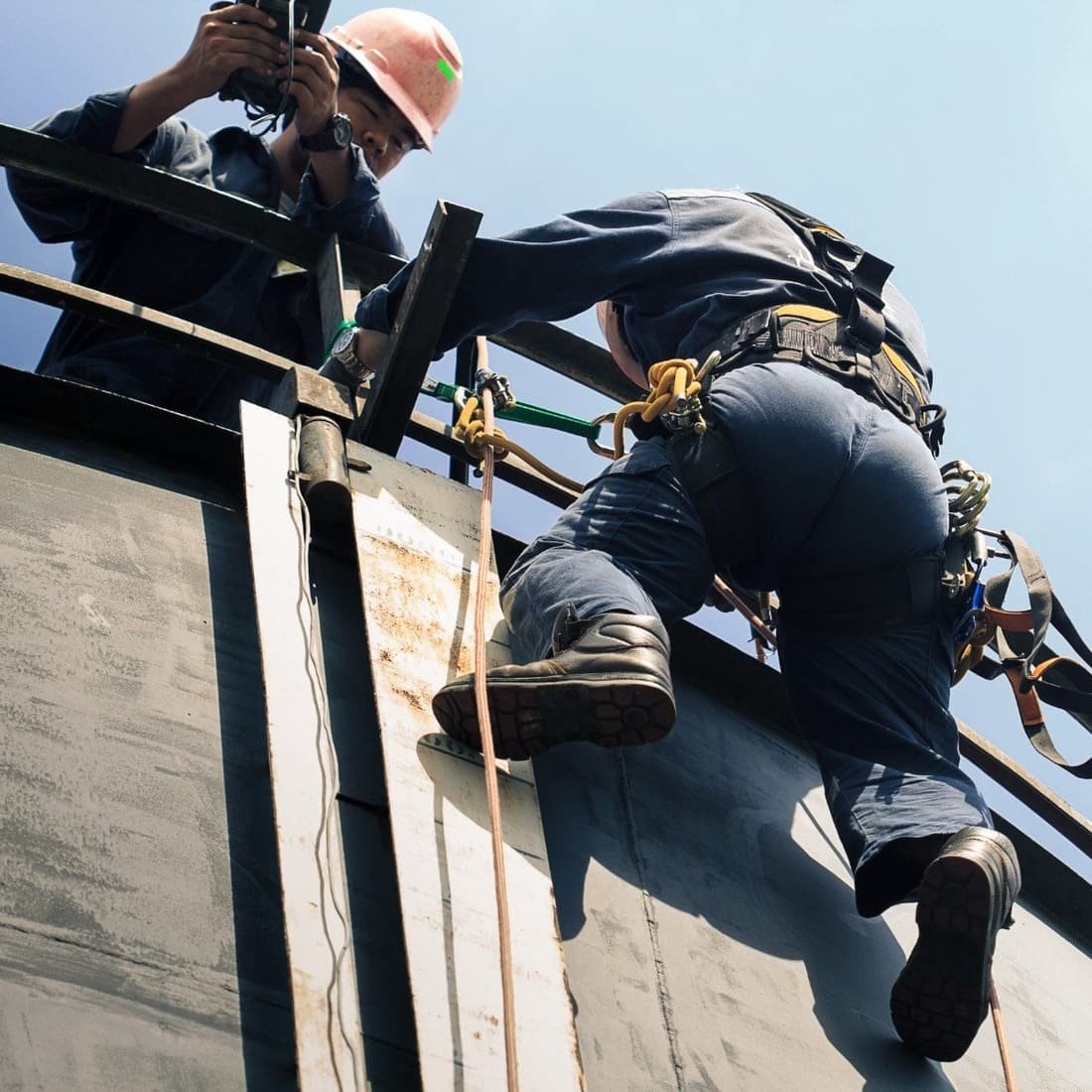
Risk assessment
Hazards above, below and at the edge, with controls.
-
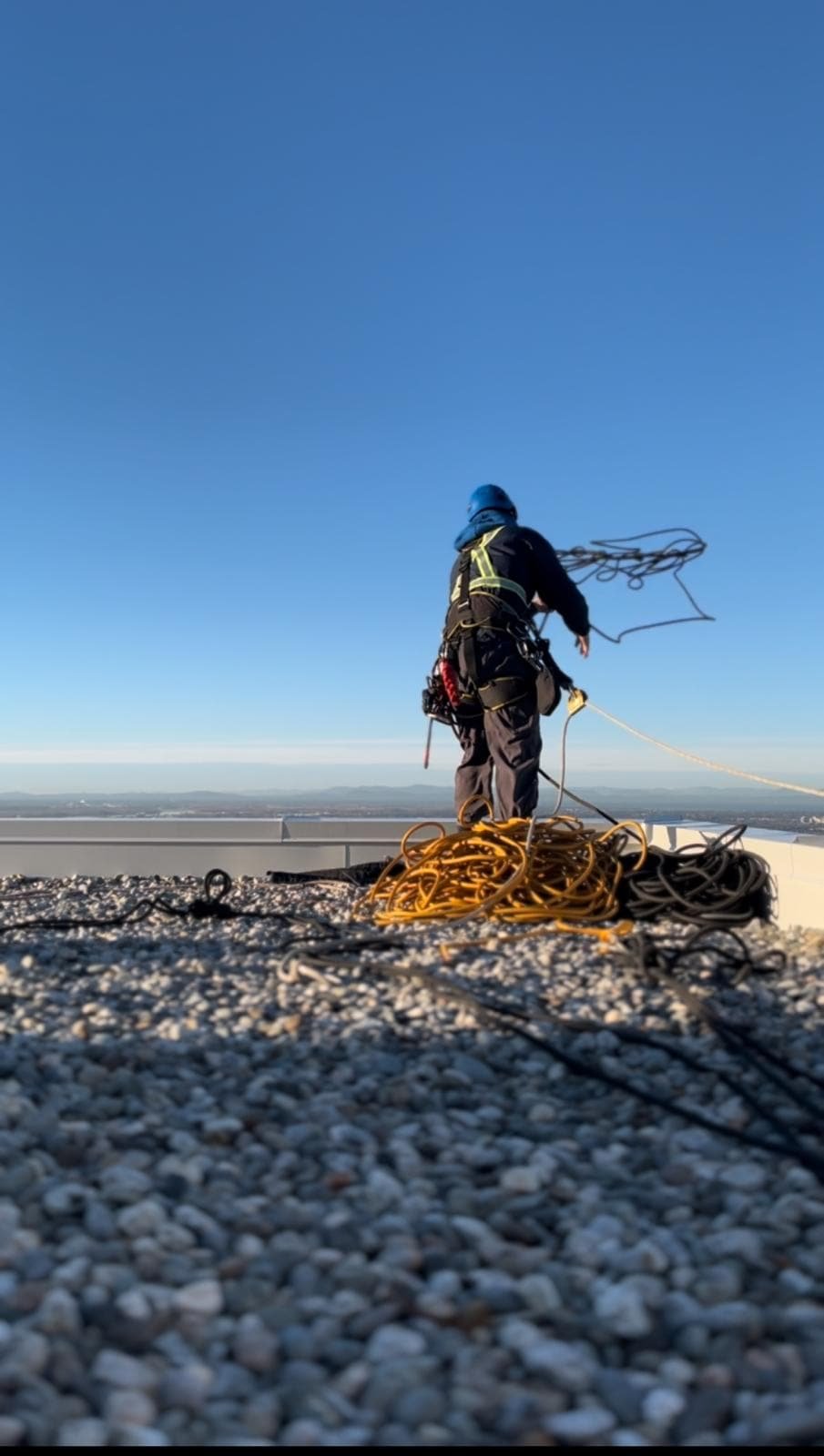
Method statement
Sequence, crew size and duration your tender can rely on.
-
Budget
A number early enough to shape the design.

Questions
Questions about consultation
Short answers. Call us for the long ones.

When should we call you?
At design or pre-tender stage. An anchor added to a drawing costs little; an anchor added to a finished roof costs a lot.
What does a site visit involve?
We walk the roof, check the anchors, look over each edge and photograph the elevations. Bring the anchor inspection record if you have one.
Can you review a design for maintainability?
Yes. We look at how a window cleaner or sealant crew will reach each surface in twenty years, and mark what cannot be reached.
Will you price against scaffold?
Yes. We give both figures where both are practical, so the comparison is on your desk.
Access planning on the roof
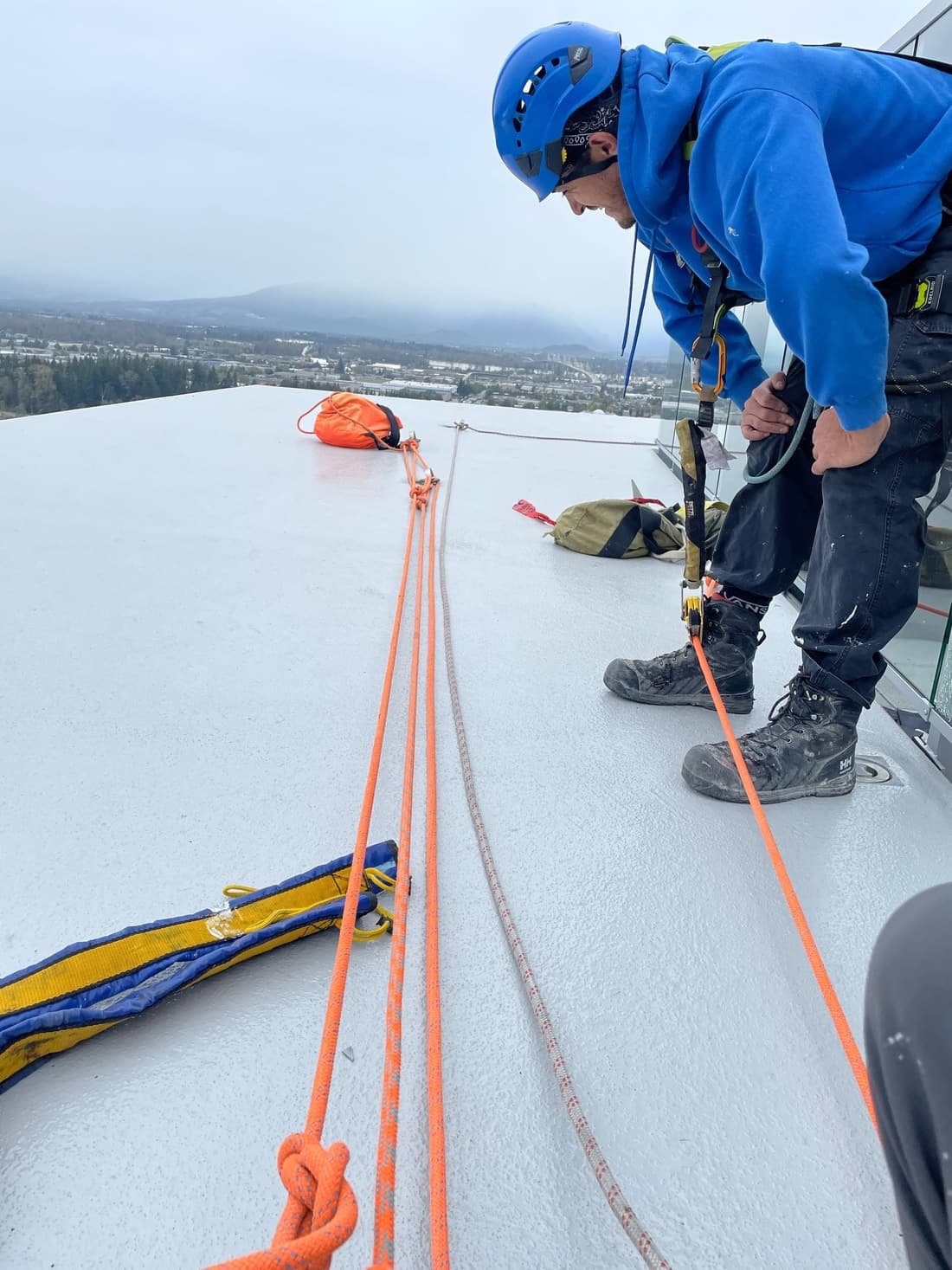
What a roof offers decides the method: its anchors, its edges and what stands below.