Waterproofing membranes
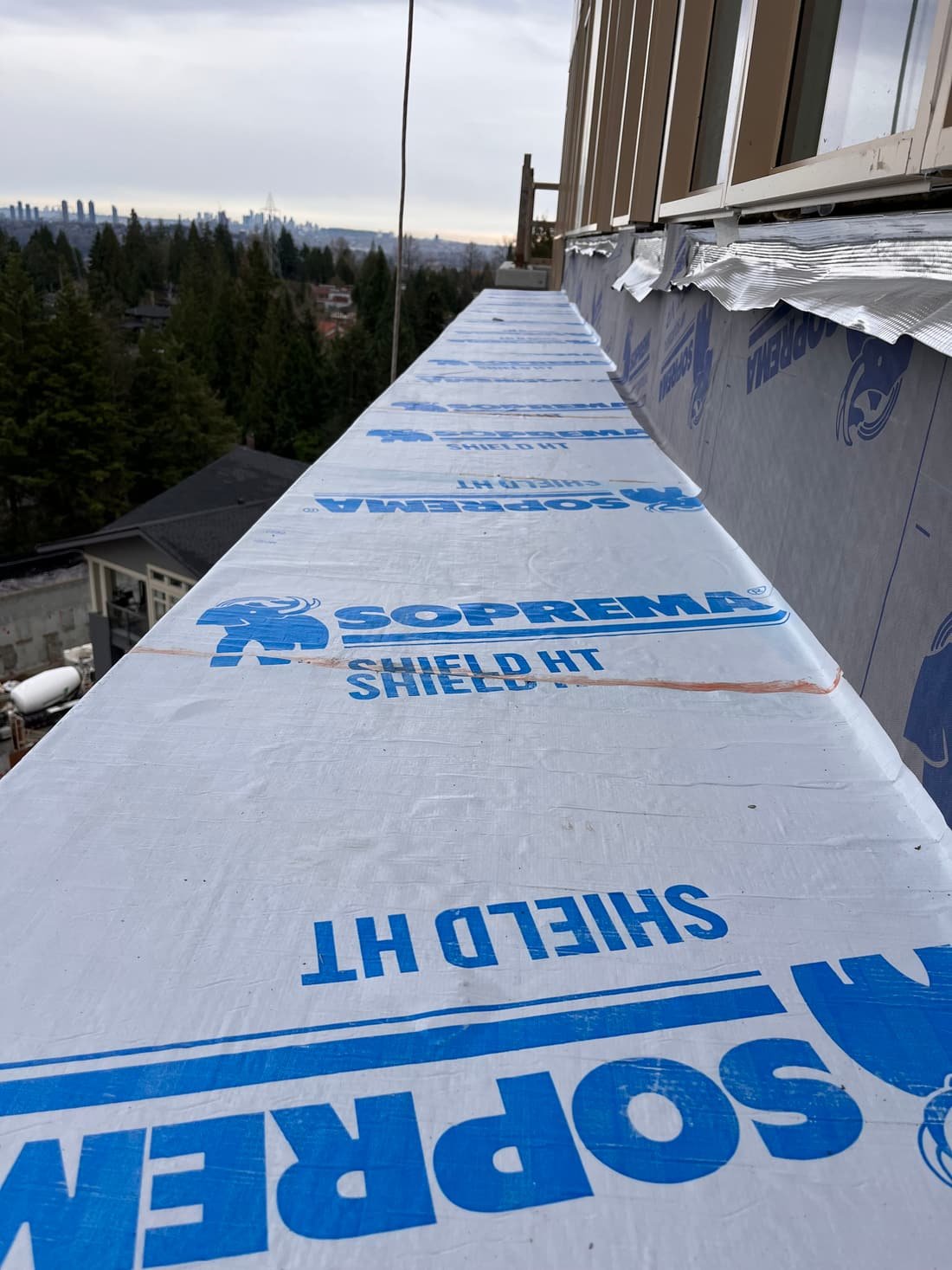
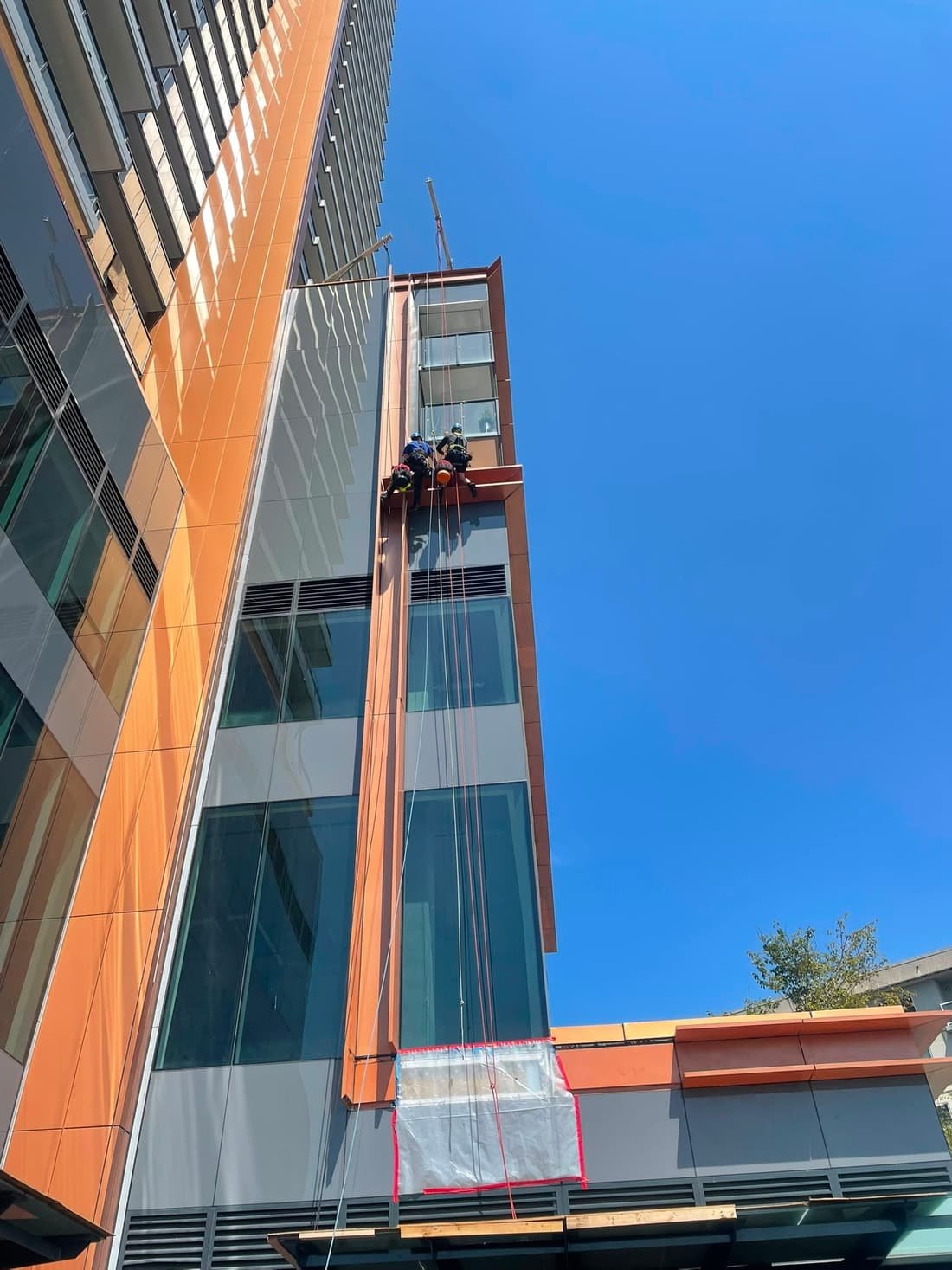
Where sealant alone will not hold, a membrane does. We apply liquid polyurethane and PMMA and install self-adhered membranes at balcony edges, upturns and wall transitions, reached by rope.
Membrane work we do
A membrane is only as good as its laps and its primer. We follow the manufacturer’s sequence and photograph each layer.
- Liquid-applied
Polyurethane and PMMA rolled or brushed over primed, reinforced details.
- Self-adhered
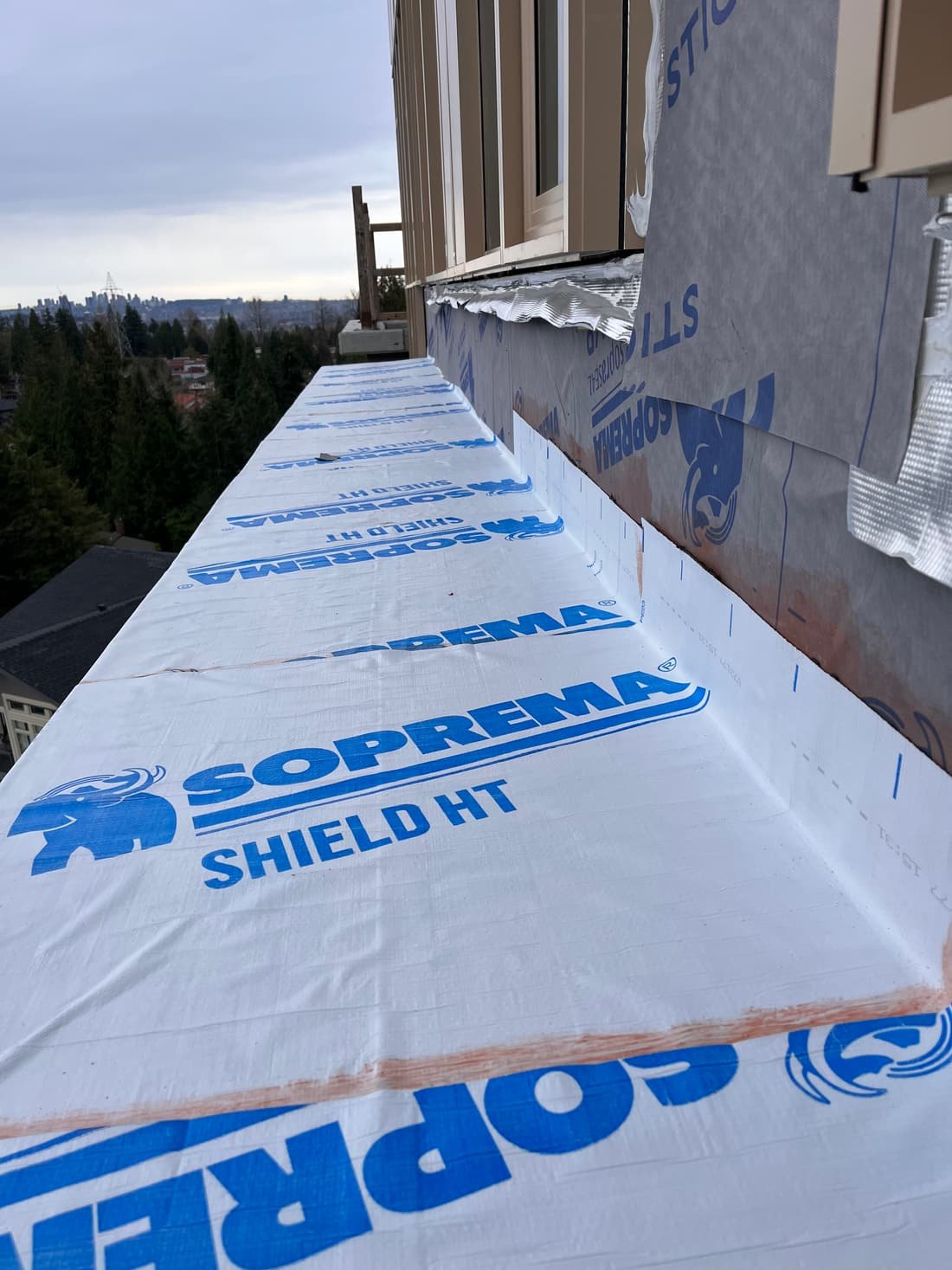
Sheet membrane lapped shingle-fashion at openings and transitions.
- Balcony edges
Slab edges and door sills tied into the deck coating.
- Penetrations
Anchors, brackets, pipes and scuppers sealed into the membrane.
- Repairs
Cuts, blisters and open laps patched with a compatible system.
Questions about membrane installation
Short answers. Call us for the long ones.
Liquid or sheet membrane?
Liquid suits odd shapes and penetrations. Sheet suits long, straight runs. Your envelope consultant usually decides; we install both.
Does the surface need preparing?
Always. Membranes fail where they were laid on dust, damp or old sealant. We clean, dry and prime before the first coat.
Can you tie into an existing membrane?
Yes, if we can identify it. We test adhesion on a small area first, because some systems do not bond to each other.
What weather do you need?
A dry surface and the temperature range on the product data sheet. PMMA cures in colder weather than most polyurethanes.

Waterproofing membranes on site
Sheet membrane lapped along the top of a wall, and a membrane edge sealed where a deck meets a sill.