Building envelope inspection
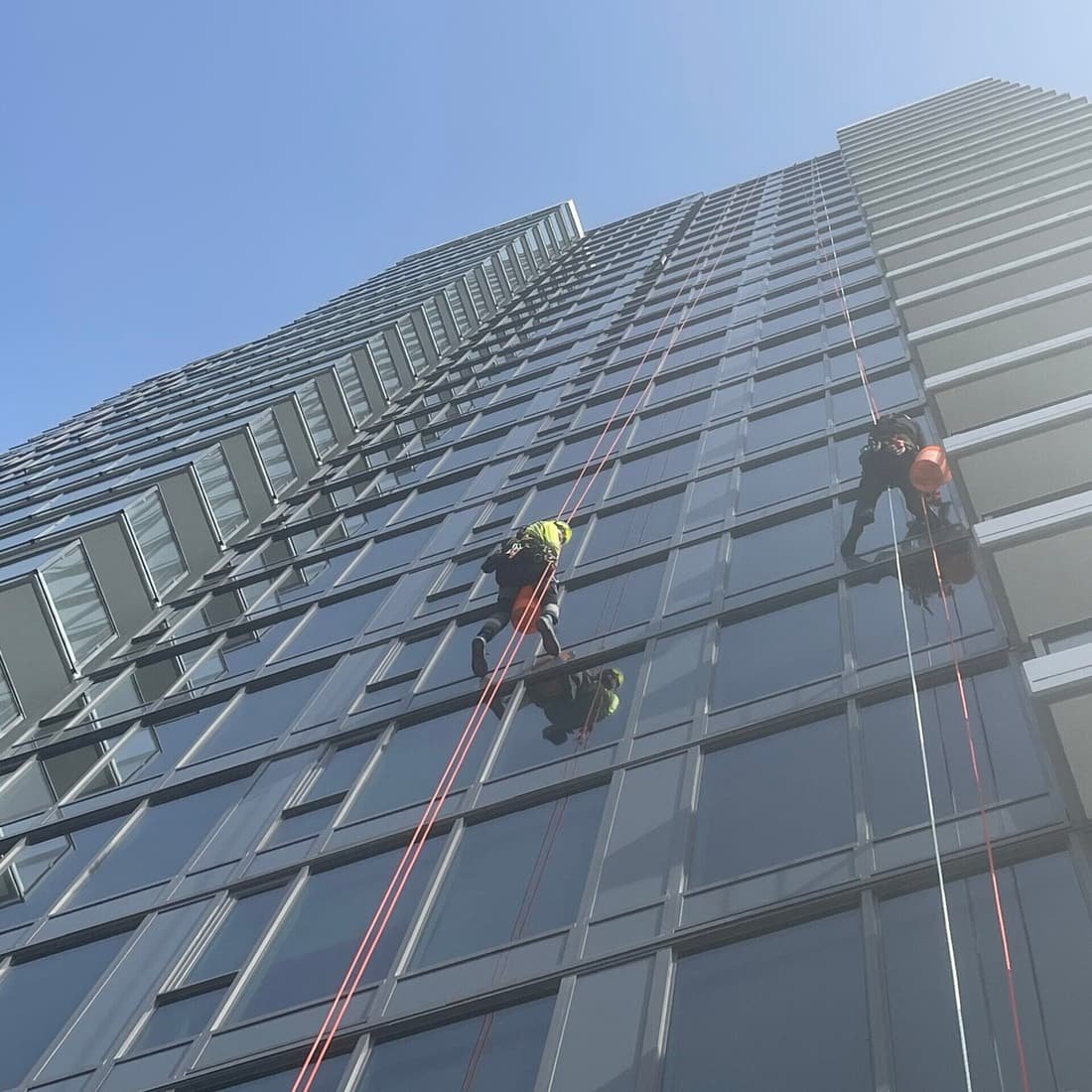
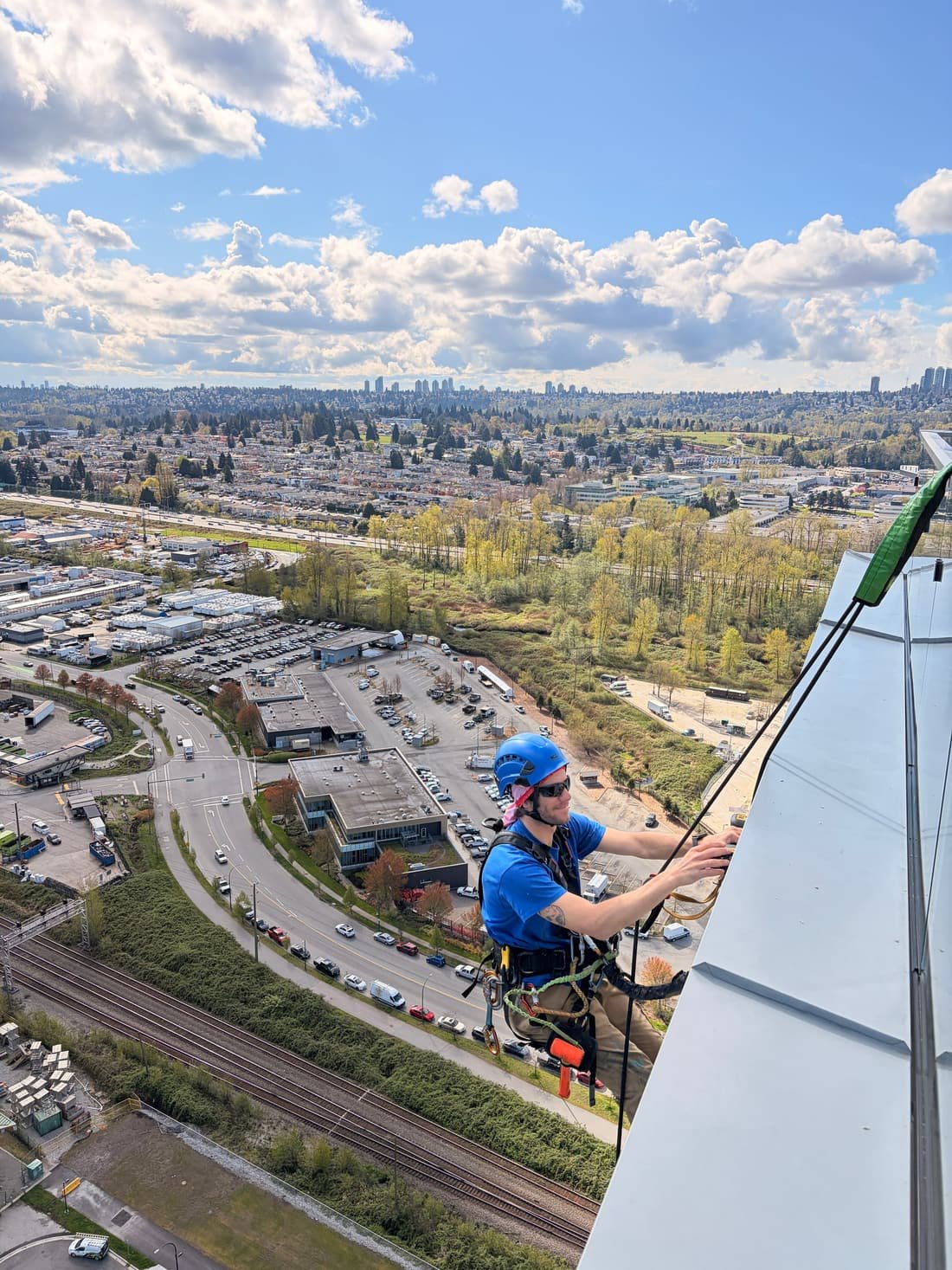
Binoculars and drones show where to look. Ropes put a technician’s hands on the joint. We inspect whole elevations drop by drop and report each defect with a photograph and a location.
What an inspection covers
We inspect to your consultant’s checklist, or to ours when a council wants a first look before a depreciation report or a warranty deadline.
- Sealant
Adhesion, cracking and missing joints, with pull tests on request.
- Cladding and glazing
Loose panels, cracked glass, failed gaskets and fixings.
- Flashings
Open laps, back-sloped caps and missing end dams.
- Concrete
Cracks, spalls and rust stains sounded with a hammer.
- Balconies and anchors
Membrane edges, guard fixings and roof anchor condition.

Questions about envelope inspection
Short answers. Call us for the long ones.
Why inspect by rope and not by drone?
A drone finds obvious damage quickly. It cannot press on a sealant bead, tap concrete or lift a flashing edge. Rope access does both jobs in one visit.
What do we get at the end?
A report with every defect photographed, located on the elevation and ranked by urgency, plus a repair budget if you ask for one.
How often should a building be inspected?
Many envelope consultants ask for a review every few years and before the warranty on a new building runs out. Your maintenance manual sets the interval.
Do you need roof anchors?
We use certified roof anchors where the building has them. Where it does not, we plan another tie-off with your engineer or use a swing stage or lift.

Inspection drops
A technician covers a strip about two metres wide on each descent, so nothing on the wall is judged from a distance.