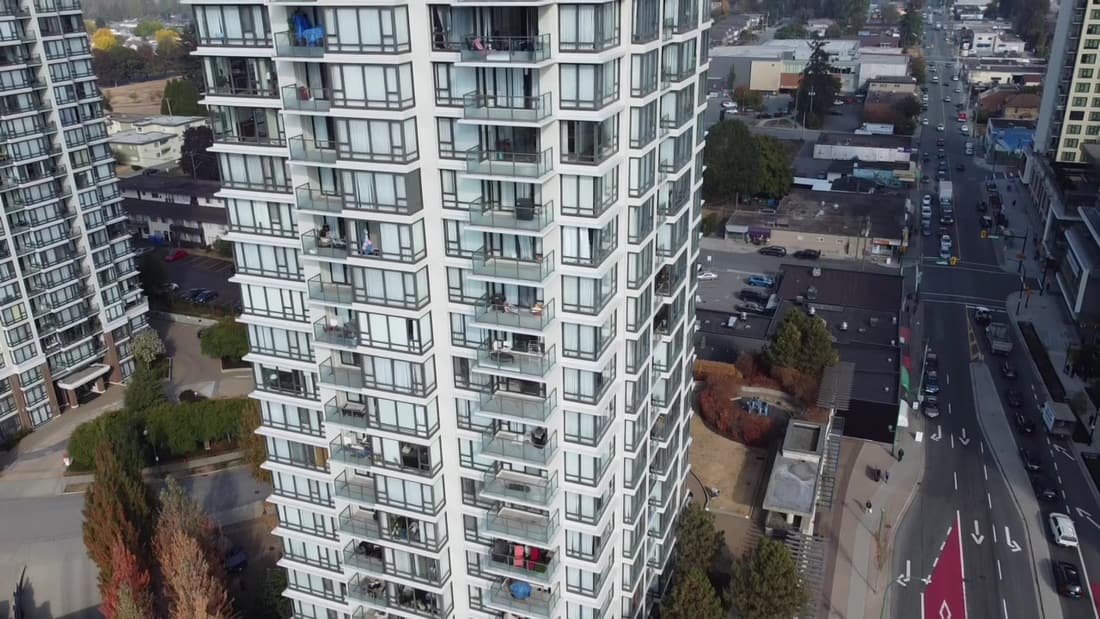
Traffic coating replacement
A worn balcony or parkade membrane lets water into the slab and the suite below. We grind off the old coating, repair the concrete and lay a new liquid membrane with a slip-resistant finish.
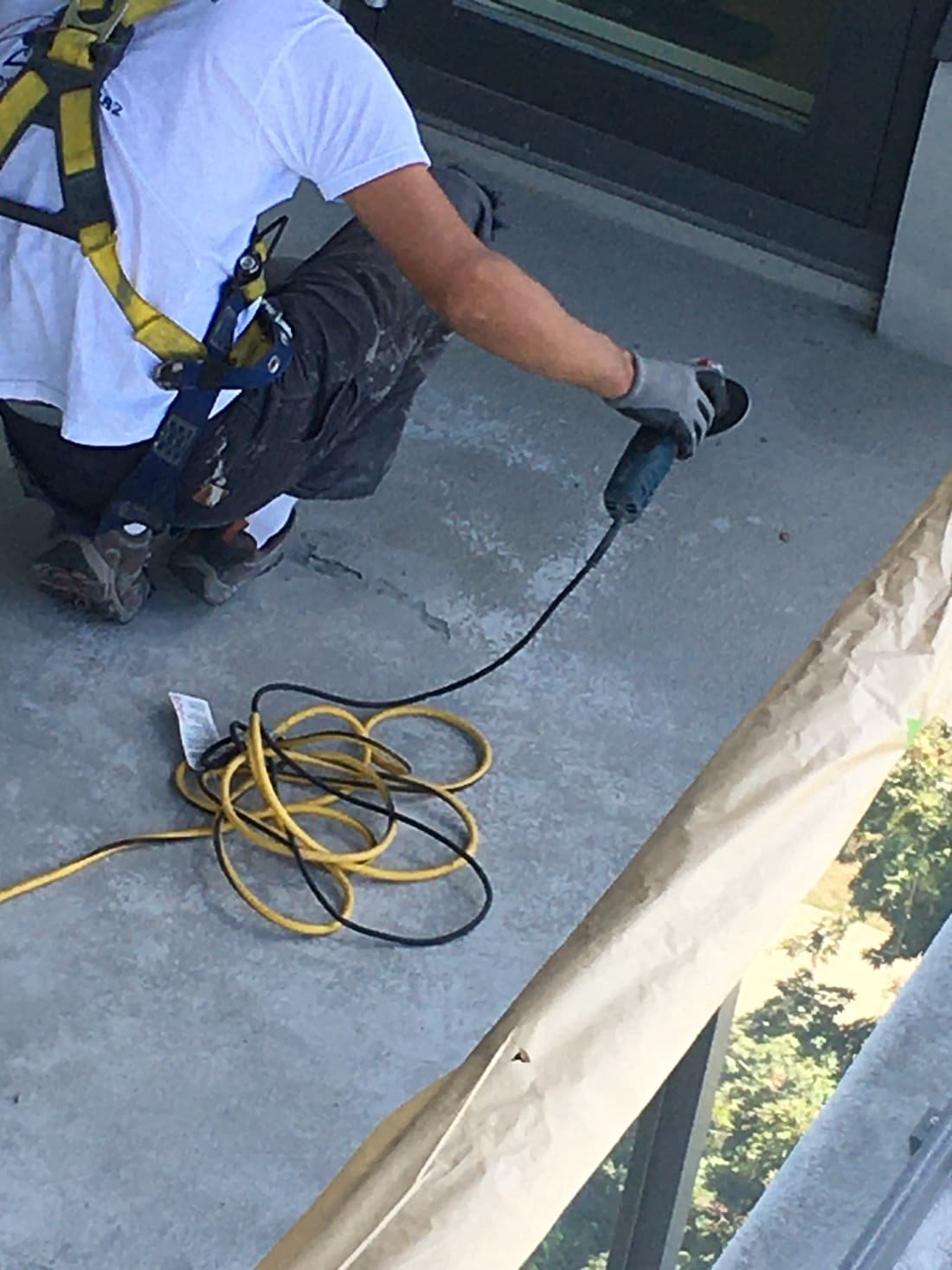
Steps in a recoat
Each layer needs its own cure time, so a balcony is normally out of use for a few days. We give residents the dates in writing.
- Remove
Failed membrane ground or stripped back to sound concrete.
- Repair
Cracks, spalls and slopes corrected so water runs to the drain.
- Detail
Cracks, joints and upturns at walls and door sills reinforced.
- Coat
Primer, base coat, aggregate for grip, then top coat.
- Cure and reopen
Foot traffic first, furniture and vehicles after full cure.
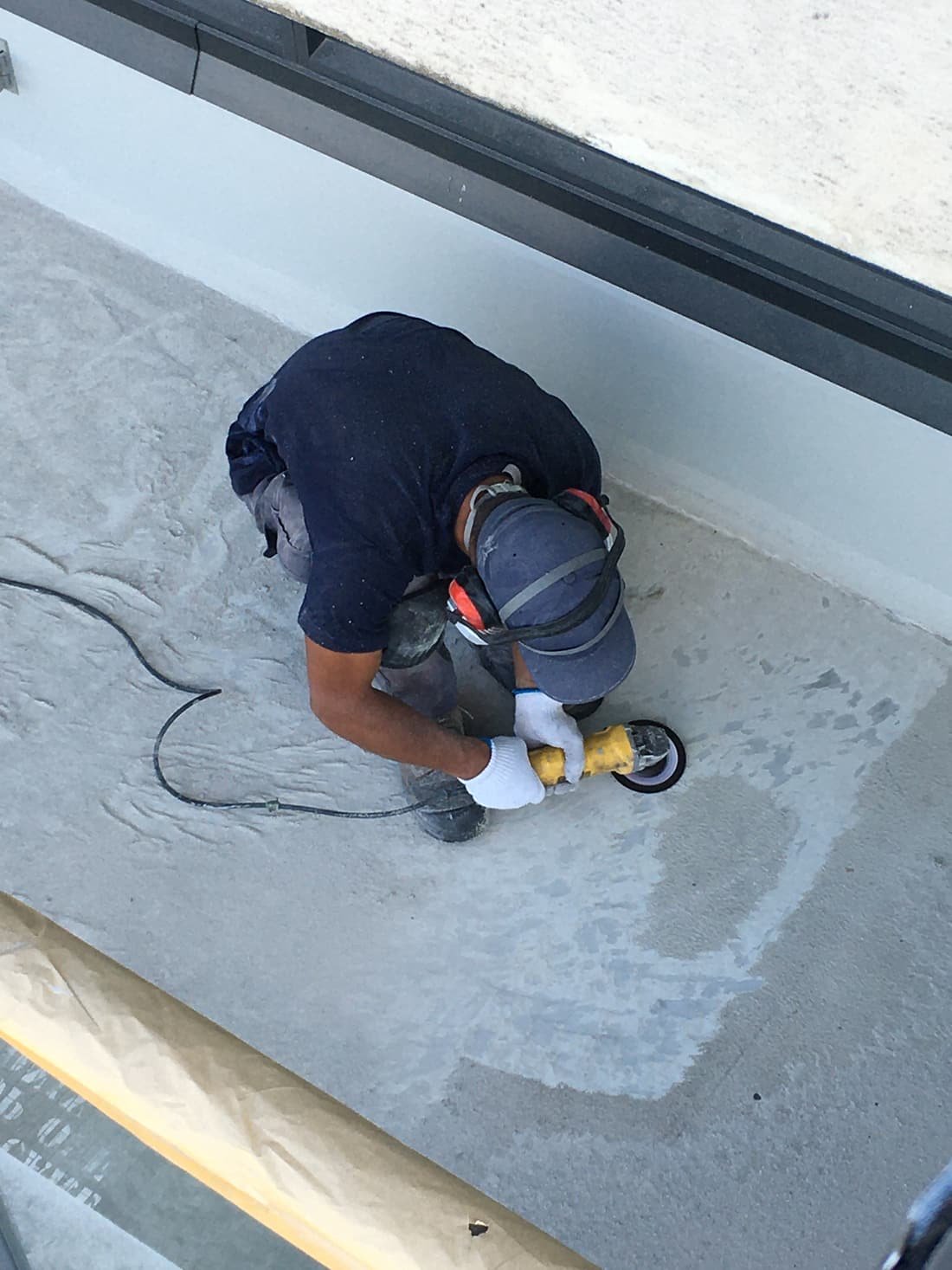
Questions about traffic coating
Short answers. Call us for the long ones.
How do I know a membrane is finished?
Bare concrete showing through, blisters, cracks that mirror the slab below, or water marks on the soffit underneath.
How long is a balcony out of use?
Usually three to five days, depending on the system and the weather. Parkade bays are phased so cars always have somewhere to go.
Can it be done in winter?
Covered parkades, yes. Open balconies need dry concrete and mild temperatures, so we schedule them from spring to fall.
Do you repair the concrete as well?
Yes. Concrete repair and the membrane are one scope for us, which avoids two contractors arguing over the same slab.

Traffic coating at Esprit 2
On this tower restoration the deck coating was replaced in one scope with the paint and the sealant.