Pressure washing at height
Algae and traffic film hold moisture against a wall. We soft wash painted and clad surfaces at low pressure and pressure wash bare concrete, from ropes, with runoff kept out of storm drains.
Two washing methods
High pressure strips paint and drives water behind cladding. We pick the method by surface, not by speed.
- Soft wash
Low pressure and detergent for paint, stucco, EIFS and metal panels.
- Pressure wash
Higher pressure for bare concrete, pavers and parkade decks.
- Before painting
Chalk and loose paint removed so primer bonds.
- Tanks and plant
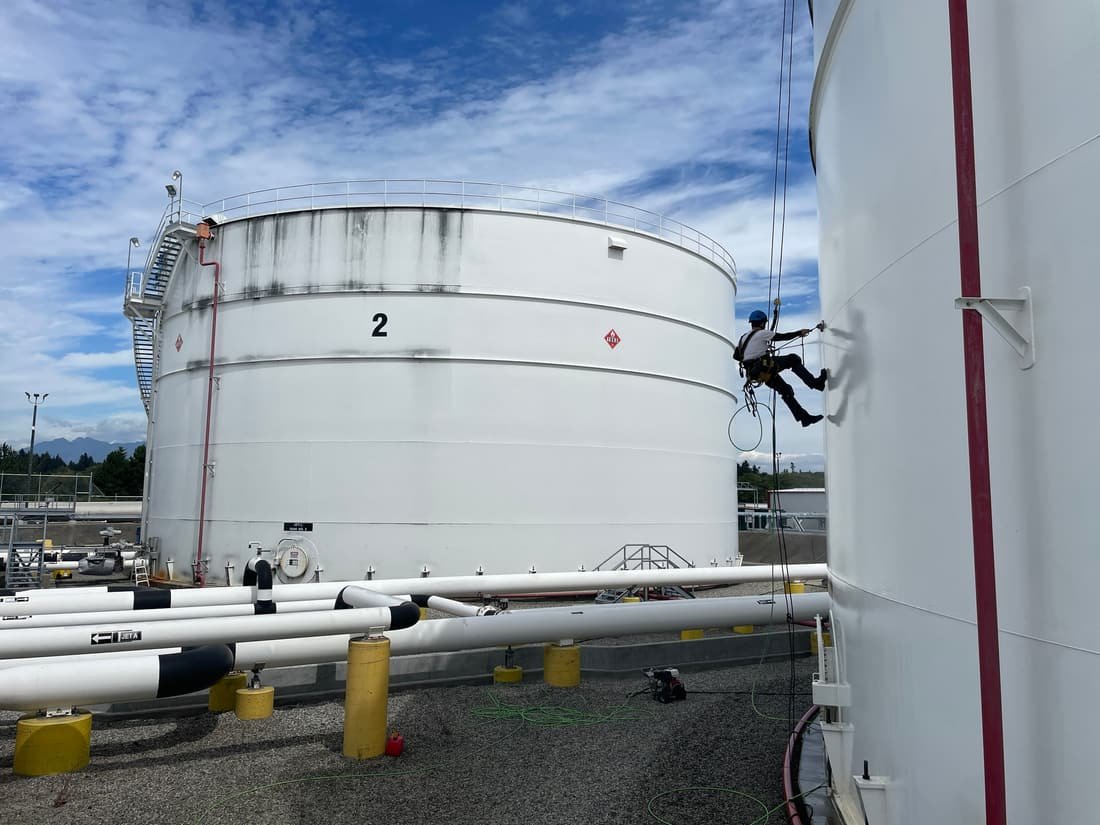
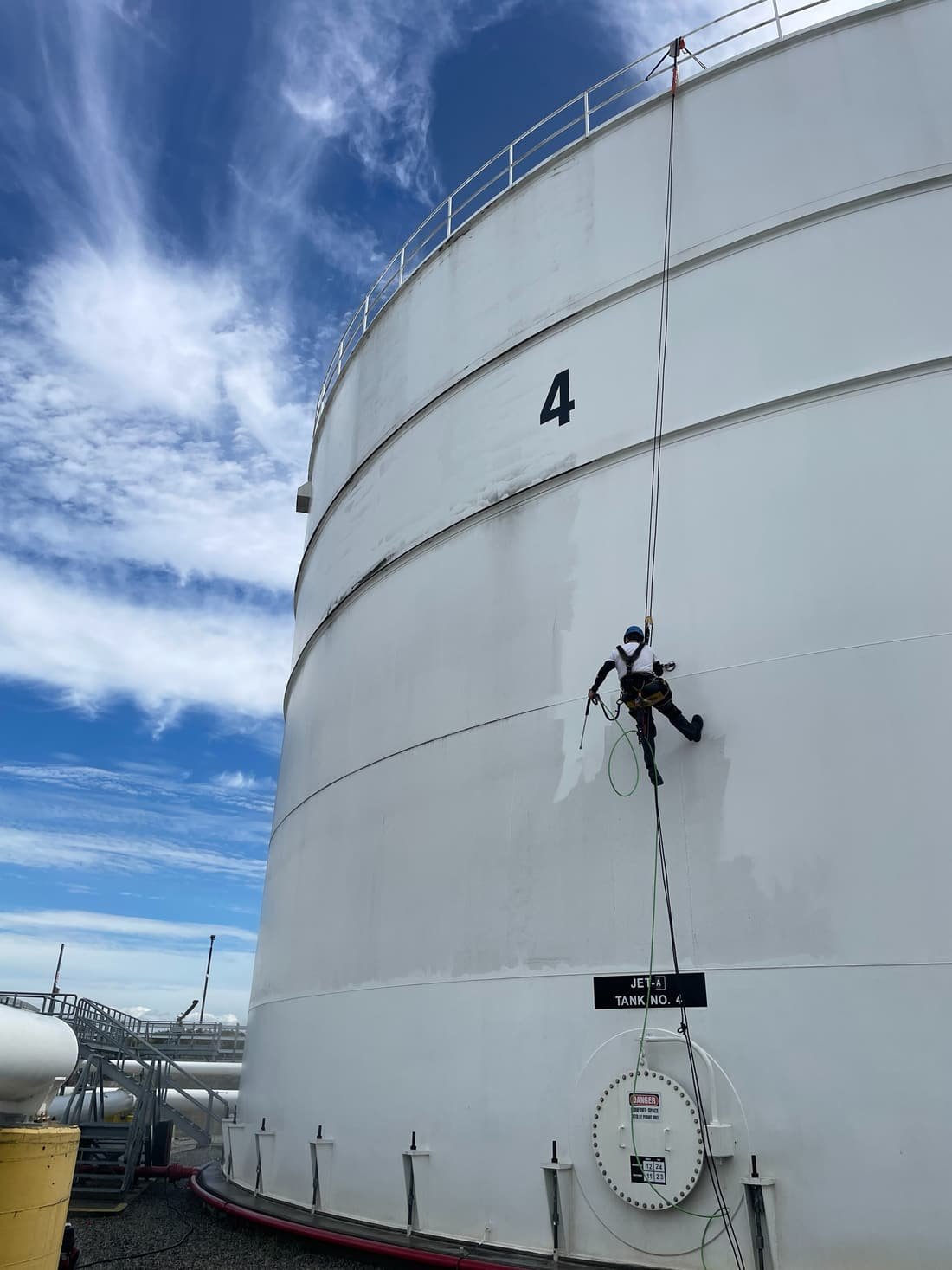
Storage tanks, silos and structures washed on industrial sites.
- Runoff control
Drains protected and wash water managed to site rules.
Questions about pressure washing
Short answers. Call us for the long ones.
Will washing damage the sealant or paint?
Not at the right pressure. We test a small area first and keep the lance off sealant joints and window gaskets.
Do residents need to close windows?
Yes, on the elevation being washed that day. We post the schedule in advance.
How often should a building be washed?
Shaded north walls grow algae fastest and often need washing every two to three years. Sunny walls go longer.
Can you wash and inspect in one visit?
Yes. A technician on ropes sees every joint while washing, so we can report defects from the same drops.
Pressure washing on site
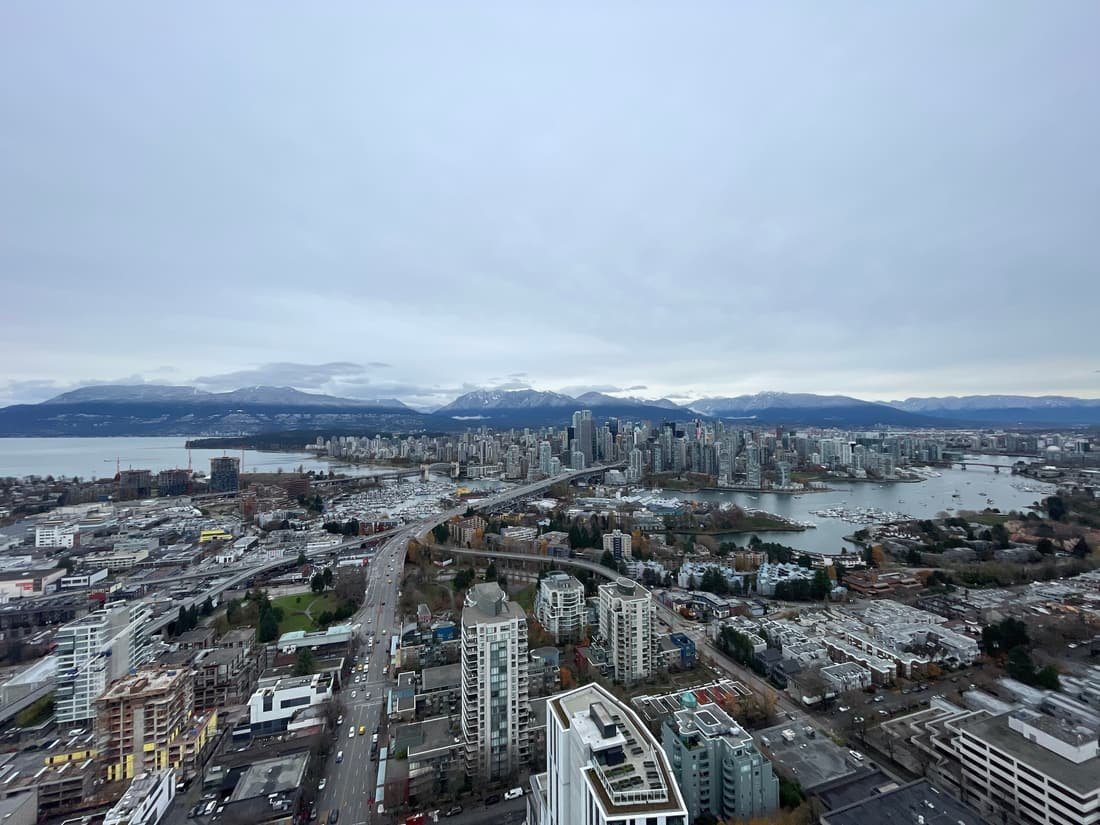
A fuel tank at the airport and a house on a slope, both washed from ropes.