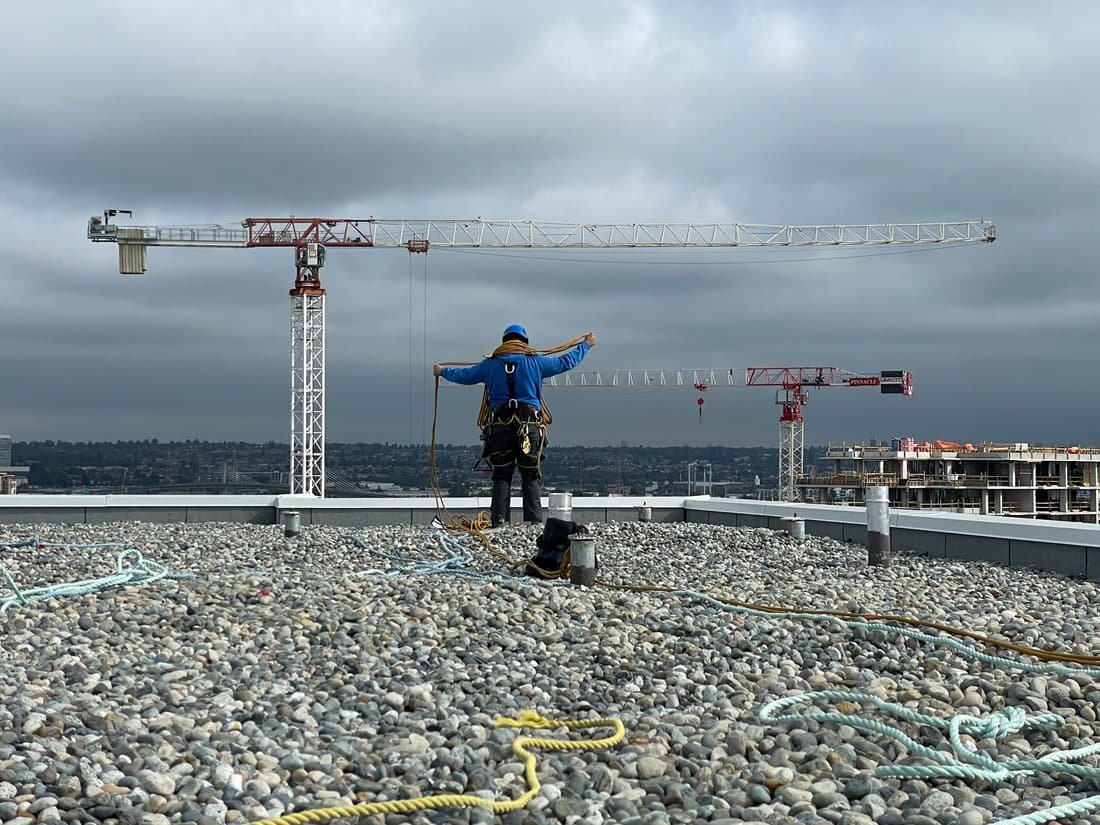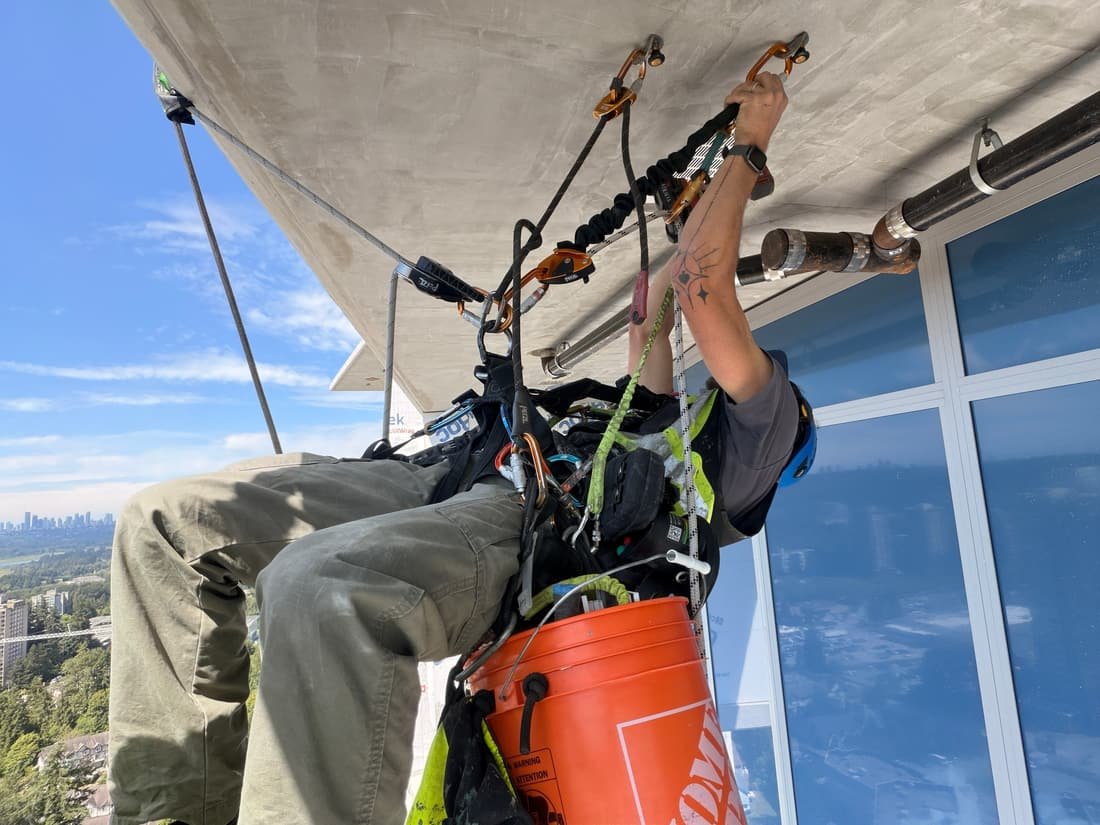
Roof anchor inspection
Window cleaners and envelope crews hang from your roof anchors. Anchors are inspected every 12 months and load-tested at the interval the engineer or manufacturer sets, commonly every five years.
Anchor services
A building owner is responsible for the anchors on its roof. Without a current inspection, most contractors will not tie off to them.
- Annual inspection
Each anchor checked for corrosion, damage, movement and labelling.
- Load testing
Pull tests on adhesive and mechanical anchors to the specified load.
- New anchors
Anchor points drilled and set to an engineer’s layout.
- Roof plan and logbook
An up-to-date anchor plan and inspection record for the building file.
- Repairs
Failed anchors tagged out, replaced and retested.
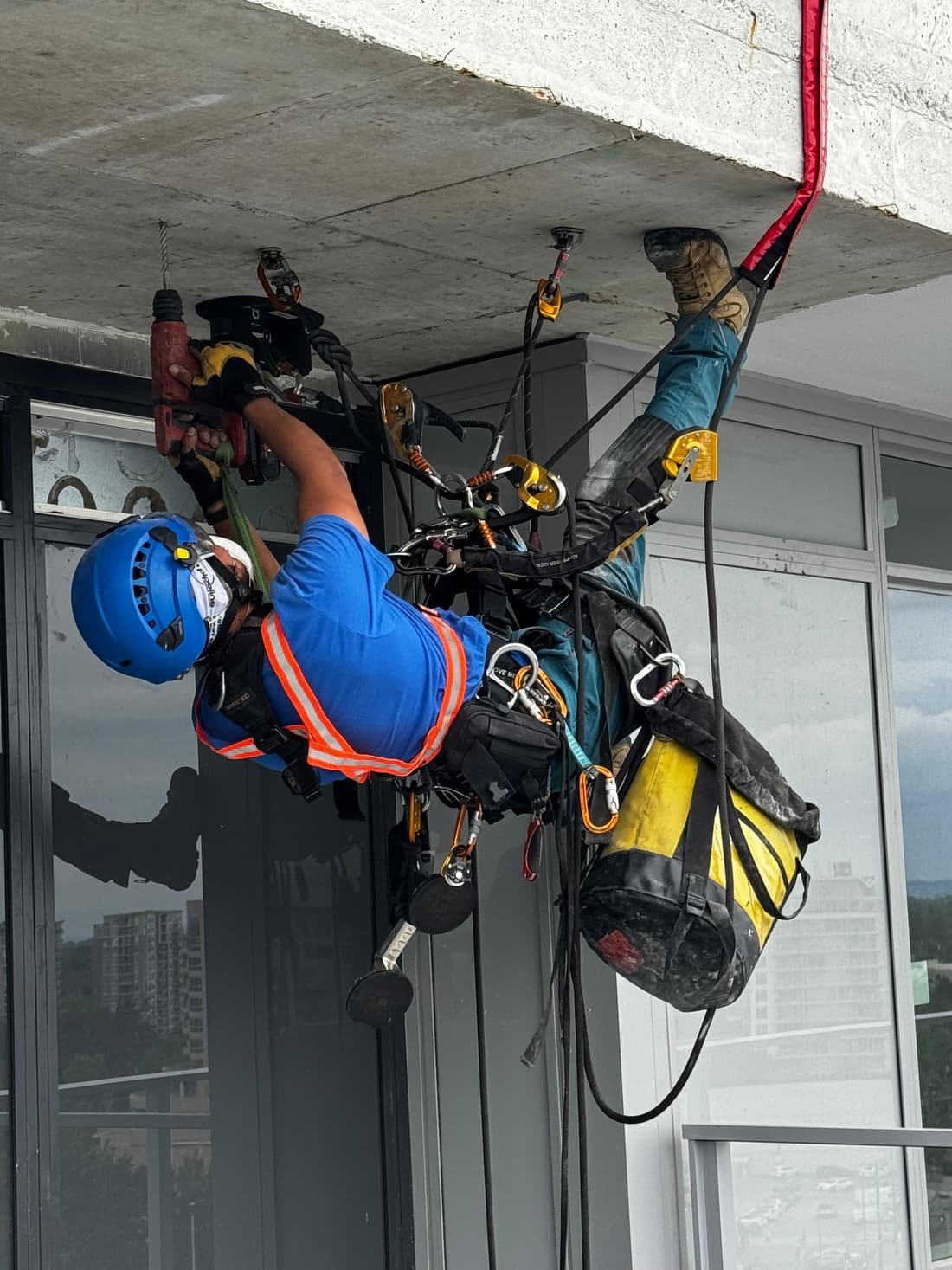
Questions about anchor inspection
Short answers. Call us for the long ones.
Who is responsible for roof anchors?
The building owner, which for a strata means the corporation. Contractors must check the inspection record before they use the anchors.
What happens if an anchor fails?
It is tagged out of service straight away and listed in the report. We price the replacement and retest it once it is in.
Who signs the certification?
A professional engineer signs anchor certifications. We carry out the inspection and testing on the roof and work alongside the engineer who signs.
Our building has no anchors. Now what?
An engineer designs a layout for the roof and we install it. Until then, work can sometimes be done from a swing stage rigged with weighted beams, or from a lift.

Roof anchors in use
Every rope on a façade runs back to anchors like these, which is why their inspection record matters.